
Providing safe meals for students with medical dietary needs through the INDIGO Accommodation Kitchen
by Mark H. Anbinder
Cornell Dining has long supported students with food allergies, food sensitivities, and other medically diagnosed dietary needs through a variety of programs. That has included labeling for major allergens as well as gluten throughout our eateries; our gluten-free, peanut-free, and tree-nut-free dining room, Risley Dining.
The wide range of menu options and robust labeling program meet the needs of many students. For students with severe allergies or complex medical needs, though, the food available on the serving lines at residential dining rooms may not be safe or adequate. In some cases, that’s required preparing individualized meals for students whose dietary needs meant they couldn’t safely navigate the options available to everyone.
Meeting a new Challenge
“Over the past five years, the dietary needs of our students have become increasingly complex,” according to Registered Dietitian/Nutritionist Clara Matton with Cornell Dining’s Nutrition Team, as more of them “have multiple medical diagnoses that affect both what and how they eat.” This has resulted in a threefold increase in the number of students requiring individualized meals to safely meet their needs.
Historically, the students requiring individually prepared meals had top nine allergies or celiac disease. Now, students who register with Student Disability Services (SDS) might be bringing a wide range of medical dietary needs to campus, including multiple food allergies, low FODMAP diets, low sodium or high fiber requirements, and neurodivergent dietary sensitivities.
Individualized meal production required as much as 1.5 hours for the culinary team to prepare one safe meal. While the Dining teams have always been committed to safely supporting such students, it was becoming increasingly clear that a more sustainable solution was needed.
Pilot program at Morrison Dining
Nearly two years ago, a team based in the Morrison Dining kitchen launched a pilot program with menus built around simple, whole foods prepared without seasoning or oil, making meals suitable for a wide range of medically diagnosed dietary needs.
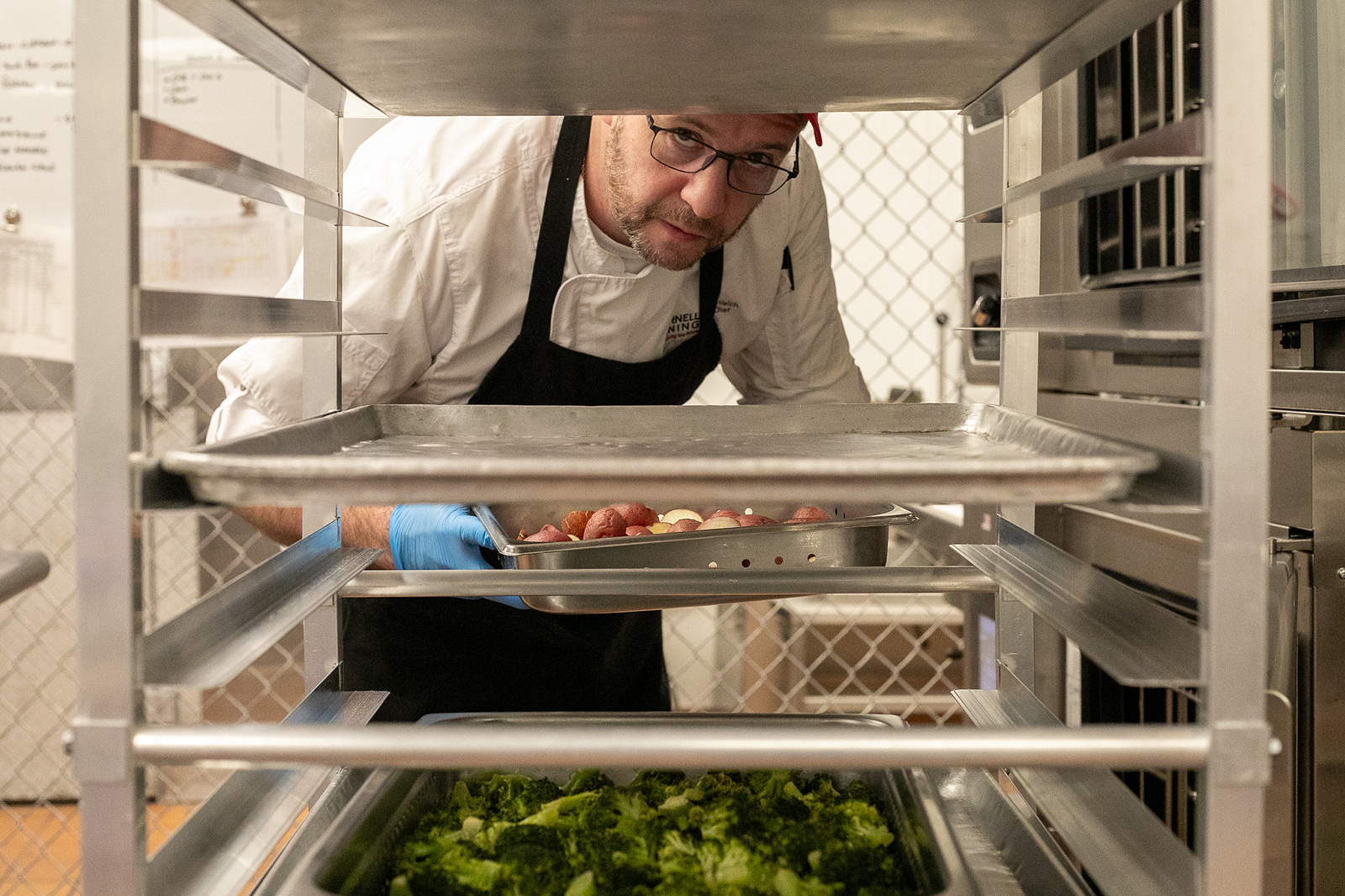
That program arose from a small collaborative team that included Senior Chef Joshua Holden, Executive Chef Ambarish Lulay, and Nutrition Program Manager Michelle Nardi, setting out to develop a first-of-its-kind model that could empower students to choose what to eat and when, from a standardized menu of safe, flexible, and convenient options that made safe batch cooking possible for this audience.
A new home for Fall 2025
Building on the success of the pilot program that used shared kitchen space, Cornell Dining officially launched the INDIGO Accommodation Kitchen in Fall 2025 in the third-floor kitchen of Robert Purcell Community Center. Formerly the kitchen space for the Robert Purcell Marketplace Eatery and Cornell Dining’s commissary kitchen before Morrison Dining opened, this facility provides a dedicated space with dedicated equipment and a specialized culinary team.
“It’s important for us to slow down and be sure our movements are done with intention,” says Sous Chef Brian Welch, who leads the INDIGO Kitchen team. “Everything is happening at max speed” in most of Cornell Dining’s kitchens, he says. “In our program, it’s the opposite. With the variety of cross-contact scenarios, working slowly and intentionally is paramount.”
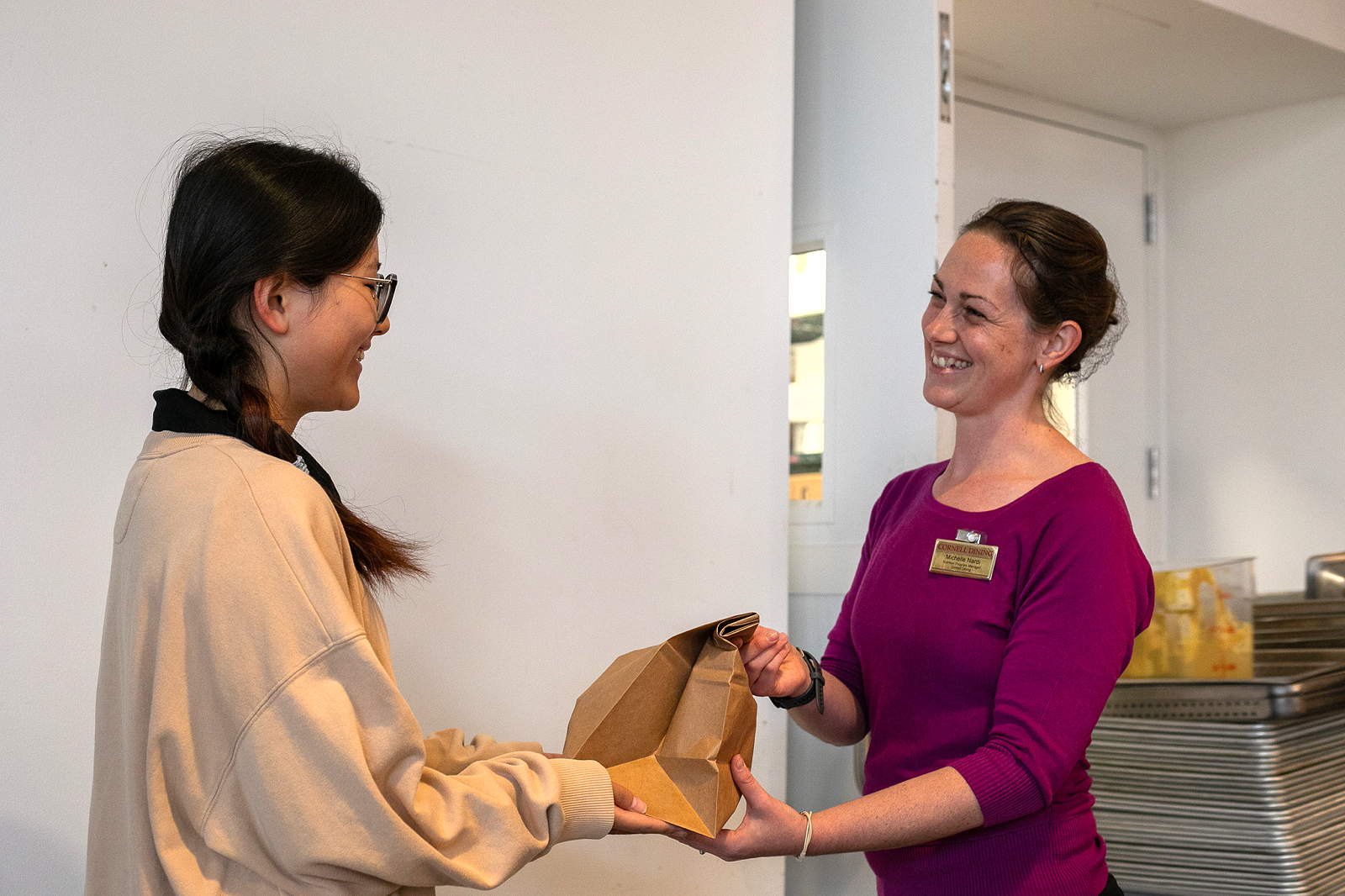
Students who are identified by Student Disability Services as needing individualized meals can place orders in advance from a menu of simply prepared vegan, vegetarian, and animal proteins such as chicken hard boiled eggs, and black beans; high- and low-fiber vegetables and starches including kale, carrots, sweet potato, or white or brown rice; plus add-ons like a garden salad, guacamole, Greek yogurt, or simple desserts. Detailed ingredient information is provided via NetNutrition. Students can then pick up their pre-ordered meals at one of four designated dining rooms around campus, and can either enjoy their meals right there with friends or take them elsewhere on campus, allowing both for greater flexibility and the inclusive social experiences that are such a big part of the campus dining experience.

“I value the allergy safe option and care that goes into keeping it safe of specified allergies,” says one student participant in the INDIGO Kitchen program.
“Students have more options available to them and have more control over their daily meal planning” with these menu choices, says Sarah Janusz, MS, M.Ed., Assistant Director and Disability Access Consultant with Cornell’s Student Disability Services team. “Students appreciate the independence they have gained by being able to eat with friends in the dining rooms and still have food that is safe for them. Parents have been extremely happy that their students can enjoy the full Dining experience and be part of the culture on campus.”
“This program has been life-changing for our son,” says Anne, a parent of a supported student. “We are very grateful for the INDIGO Kitchen team’s commitment to supporting students with dietary challenges.”
Why “INDIGO”?
The “INDIGO Kitchen” name is an abbreviation for “Individualized Dining on the Go,” highlighting the personalized preparation and portability of these meals, and the commissary nature of the program, with a nod to the color purple, which is commonly recognized as the designated color for food allergen labeling.
Chef Brian says that while INDIGO is designed to manage the needs of students affected by top-nine food allergies, it was also specifically developed to meet the needs of “students that have many other dietary restrictions outside of the top nine. We have students that are on a low FODMAP diet, or face anaphylaxis to poultry, beef, green beans, and nightshade.”
Spicing up the offerings
Chef Brian says the INDIGO Kitchen team has used multiple surveys to get student feedback, including reaching out to students who’ve tried the program but stopped using it. “We found many students were able to self-navigate" with existing dining room offerings, “some wanted more variety, and others wanted to have more flavor in their food,” reflecting the initial approach without seasoning. Feedback this fall has led to the addition of marinara sauce with beef and taco beef with peppers and onions for Spring 2026.
“Dining has continually updated the INDIGO Kitchen program to meet the needs of students,” says SDS’s Sarah Janusz. “This can be through feedback on recipes for taste or how far in advance orders can be placed to support students’ busy schedules.”
“We’ve added sauces that are top-nine-allergen free as an option that students can add to their meals,” Chef Brian says. “They’re served on the side and are fully seasoned. For the Spring 2026 semester, we’re also offering kale pesto, romesco, and smoked paprika chimichurri.”
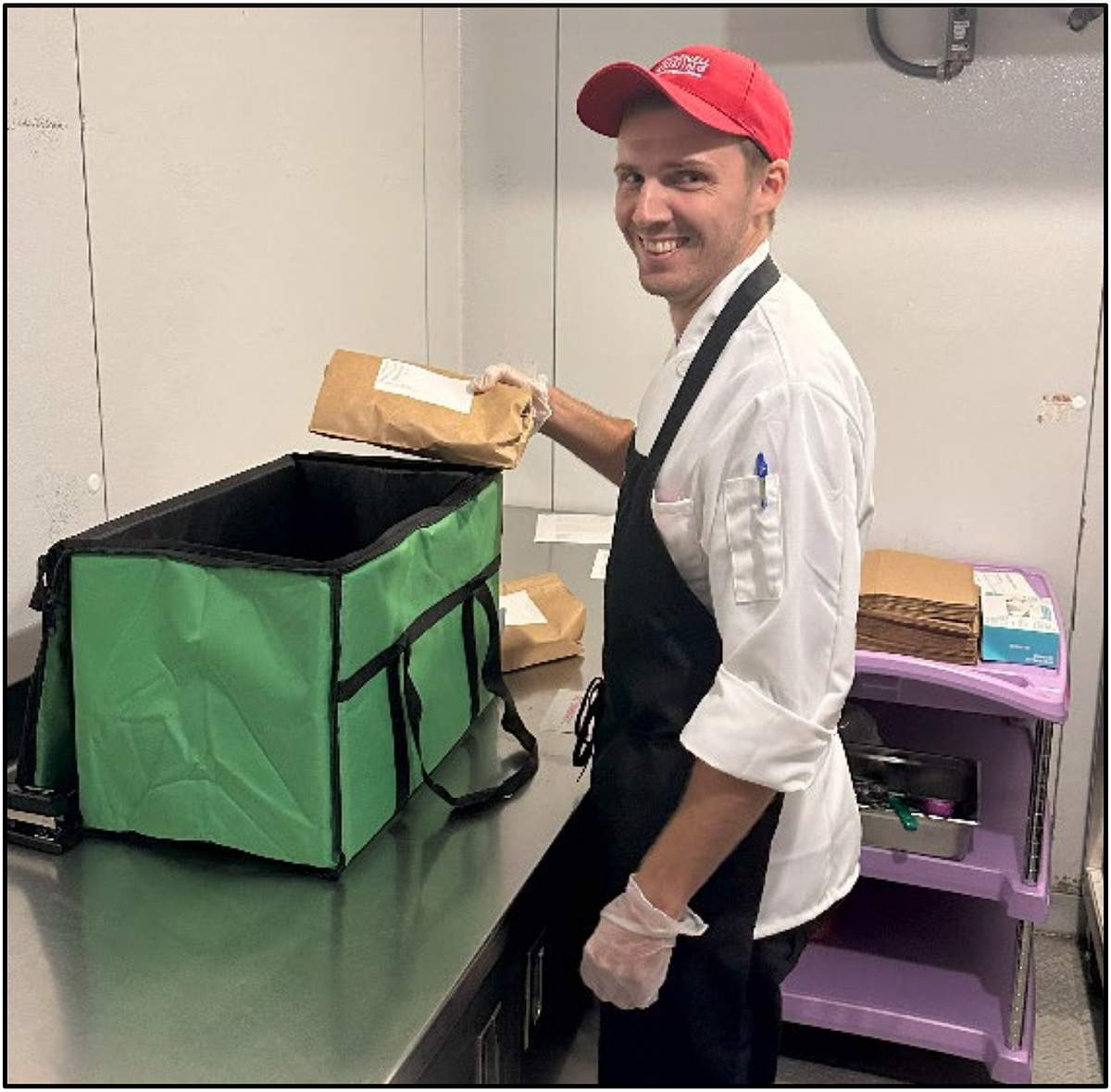
These additions let students “add the most flavor to our individualized meals without compromising the core values of our program,” says INDIGO Culinarian DonPaul Panipinto, who joined the INDIGO Kitchen accommodation program after a stretch preparing food for Morrison Dining’s Halal program. Preparing Halal meals for observant Muslim students, staff, faculty, and guests was good experience at cooking with dietary restrictions in mind. “In that position, I did my best to help tweak recipes and build menus to exclude allergens, as well, to include as many people as possible,” DonPaul says.
Never forgetting the Why
“This program has been a lifesaver for my son and has made it possible for him to go to college with minimal worry about his allergies,” says a parent with a student using the INDIGO Kitchen this year. “Prior to working with Clara, my husband and I were very concerned about how our son would cope in college. We had assumed that he would have to buy his own groceries and cook his own food in the communal kitchen, but we also knew that this would be a lot to handle for a new college student with executive functioning issues. After meeting with Clara and Chef Brian, we felt tremendously relieved because we know that our son will be well taken care of and that he can now focus on his academic and campus life.”
“I enjoy the challenges this work brings with inclusion and safety in mind,” says DonPaul Panipinto. “Most professional cooks know how to cook safely and cleanly, but this really branches out to more than just the top-nine-allergen training everyone gets. As a parent myself, I would always want my child to have safe, reliable options for food. The INDIGO program is these students’ safety net.”
“Getting creative with the options available to us while maintaining the thought and care that goes into the cooking has strengthened our passion for serving safe food,” says Chef Brian. “Something I had not considered at first is how impactful this program is for the families of our students. The importance of peace of mind for parents cannot be overstated.”
“The Dining Nutrition team understands the why of the services they’re providing, and through the INDIGO Kitchen program, they have the opportunity to engage with students individually, which alleviates much of the stress these students and their families previously faced,” says Sarah Janusz.
About Cornell Dining
Cornell Dining is consistently ranked in the Princeton Review's top ten for best campus food among all colleges and universities in the country! That high rating comes from customer surveys, and reflects Cornell Dining's commitment to serving high-quality foods that are healthy and creatively prepared with genuine care for a diverse community. Cornell Dining operates about 30 on-campus eateries -- which include residential dining rooms, cafés, coffeehouses, food courts, and convenience stores -- and serves more than 23,000 meals a day to members of the Cornell community. For more information, visit dining.cornell.edu.