
February's Black History Month dinners celebrate the depth and diversity of cuisines across Africa and the African Diaspora
by Andrew Salamida
Cornell Dining’s annual Black History Month dinners return this February, celebrating the depth and diversity of cuisines across Africa and the African Diaspora. The month‑long series is shaped in close collaboration with Black Students United (BSU), whose student leaders help Cornell Dining’s teams refine menus and capture the cultural details that bring each regional theme to life. This partnership builds on Cornell Dining’s long-standing tradition of honoring Black History Month through food, a series that now features dishes from across Africa, the Caribbean, and the Americas.

“Cornell Dining had already been making Black cuisine during the month of February to honor Black History Month,” said Musa Jallow ’26, BSU co-president and an Information Science major in the College of Arts & Sciences. “BSU got involved in more recent years to collaborate with Dining and make this endeavor the best that it could be for the students on our campus.”
Jallow describes BSU’s role as helping Cornell Dining connect with specific student organizations who can offer guidance on regional dishes and traditions. Students from groups such as the Jamaican Student Association work directly with Dining staff to workshop recipes, suggest decorations, and offer insight into the atmosphere that accompanies their cultural cuisines. The goal, Jallow said, is authenticity paired with meaningful representation. “Proper representation is a way of celebrating, but also honoring African Diaspora tradition,” he said. “The effort put into the cooking and planning of these dinners shows respect toward the traditions of each region.”
Jallow said this year’s Southern Traditional dinner at North Star holds particular meaning for him, noting the importance of highlighting African American cuisine and its varied regional expressions. “Representation of their culture is paramount to me,” he said. “I’m happy to see more representation not just of African American food, but different African American cuisines within the region.”
For Cornell Dining, the collaboration is just as meaningful. Operations Manager Harry Ashendorf, who has overseen the month’s programming for seven years, said he looks forward to working closely with student groups each February. “I enjoy working with the students, the student groups, and the collaboration on the specific regions,” he said.
Regional flavors come from such ingredients as palm oil and habanero peppers for West African dishes, an aromatic blend called Epis for Haitian cuisine, and scotch bonnet peppers, pimiento seed, and thyme for Jamaican foods.
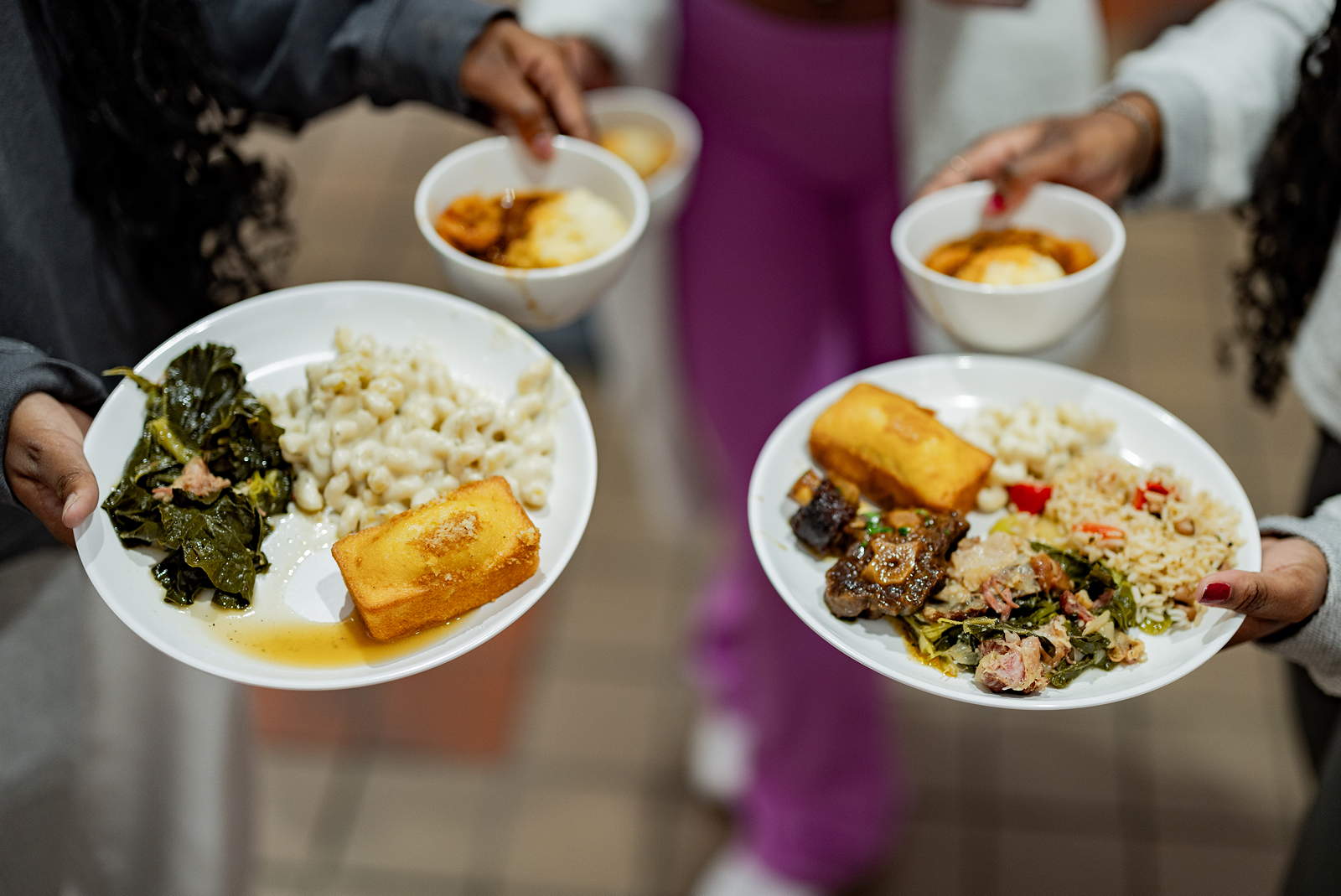
The partnership also brings learning opportunities for the Dining team, Ashendorf tells us. “I enjoy hearing and learning about the different regions and the history of the food. The students have a passion for the food and the history.”
Together, BSU and Cornell Dining aim to ensure that the dinners not only introduce new flavors to campus, but also honor the heritage, history, and communities behind the dishes, creating a February tradition that continues to grow in depth and impact.
For more details on the Black History Month Dinners, visit the Cornell Dining Events page.
About Cornell Dining
Cornell Dining is consistently ranked in the Princeton Review's top ten for best campus food among all colleges and universities in the country! That high rating comes from customer surveys, and reflects Cornell Dining's commitment to serving high-quality foods that are healthy and creatively prepared with genuine care for a diverse community. Cornell Dining operates over 30 on-campus eateries -- which include residential dining rooms, cafés, coffeehouses, food courts, and convenience stores -- and serves more than 23,000 meals a day to members of the Cornell community. For more information, visit dining.cornell.edu.