Alumni support helps students thrive on West Campus
Looking back, Bruce Mansdorf ’66 recognizes the uniqueness of his situation. A member of Cornell Athletics’ Hall of Fame, he played varsity lacrosse and football as an undergraduate and served in the Naval Reserve Officers Training Corps (NROTC). While the English major’s extracurricular pursuits forced him to navigate a demanding schedule, it did provide him with a lasting reward: meaningful connections with people and memorable experiences.
“I was in a unique position where I had several bases of ‘teammates’ that I saw regularly,” said Mansdorf. “And that sense of community was really important, helpful and seminal.”
To help ensure the next generation of Cornellians has equal access to transformative experiences, Mansdorf and nearly 700 members of the Class of 1966 have generously contributed nearly $1 million during the past two decades to bring community, wellness and arts programming directly to the West Campus House System.
“We wanted to use the great living-learning facilities of West Campus to enable people to come together and make connections and build lasting relationships with other students, friends, faculty and staff,” said Mansdorf. “Cornell can be a big place and the more connections you have in a place like that, the better off you are. We also concluded from lived experiences as adults that ‘living-learning’ took place at the dining table, and through informal and fun activities with friends and colleagues.”
For Shelby Condojani ’25, the opportunity to make early campus connections helped ease her transition to the Hill. A sophomore transfer student and Hans Bethe resident, Condojani attended the annual West Campus Wellness Fair during her first few weeks on campus and discovered ways to engage with the Cornell community while learning about important resources.
“Students receive dozens of messages every day that contain a ton of good information and resources, but that also makes it nearly impossible to keep up which means they don’t end up knowing about some really great groups,” said Condojani, a government major in the College of Arts and Sciences.
Held every September as students return to campus, the Wellness Fair is just one of many programs and initiatives supported by the Class of 1966.
“Health and well-being is one of West Campus House System’s core learning outcomes and program goals,” said Perdita Das, assistant dean of Hans Bethe House. “Our goal for the fair is to provide our residents an opportunity to interact with different departments and organizations that support student well-being and events like this also offer a moment to pause, relax and engage in something restorative.”
The push to invest in restorative, educational, student-centered programming began as the Class of 1966 deliberated their 40th Reunion class gift. While there was thought given to supporting something more physically tangible, discussions shifted as classmates shared memories of their own collegiate struggles, the people who convinced them they belonged and the support they received to see it through.
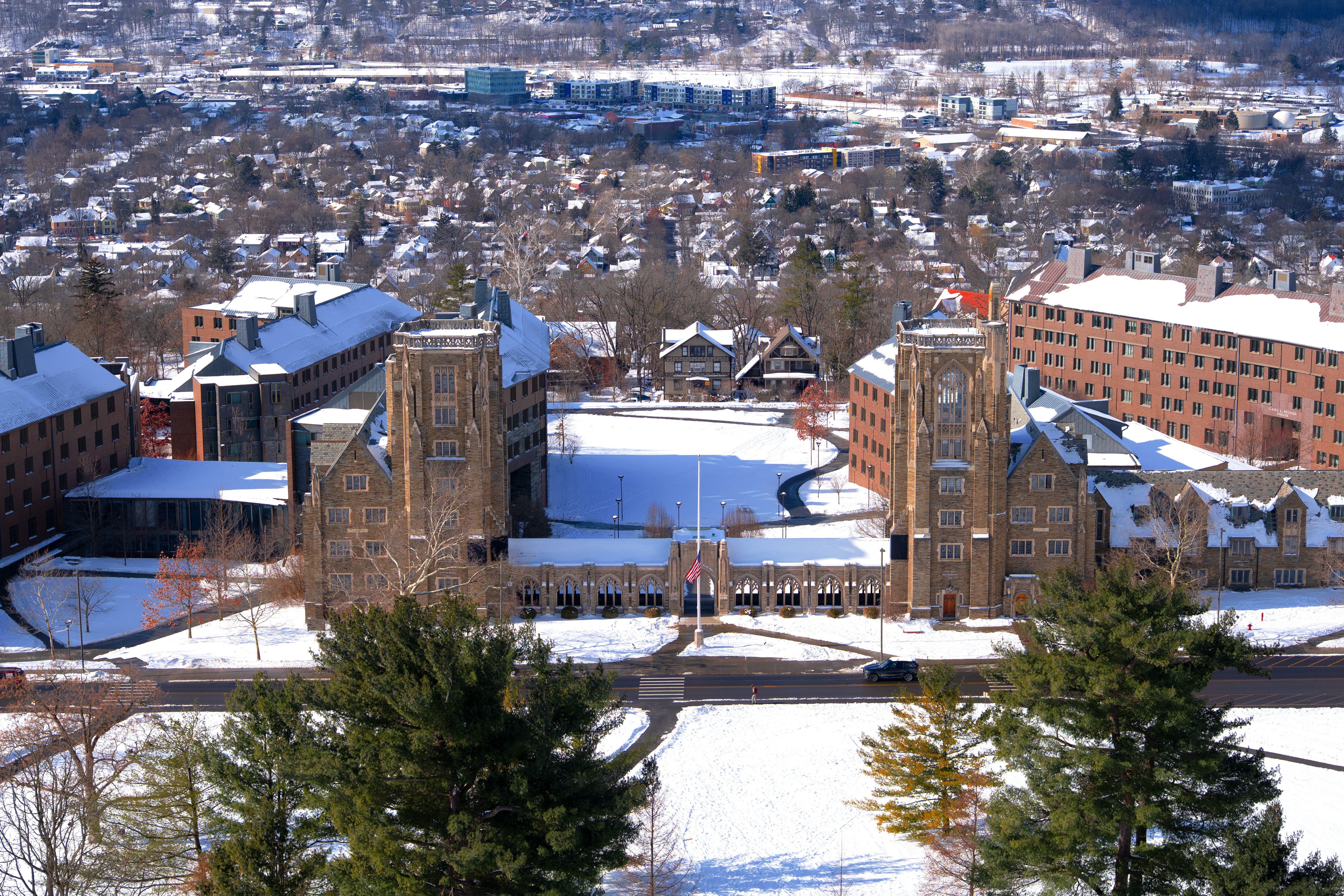
With Hunter Rawlings’ West Campus Residential Initiative already under construction, the Class saw an opportunity to fund programming to enrich the new living-learning experience.
One class officer observed that "buildings without programs are just bricks," recalled Alice Katz Berglas, who formerly served as class president and currently is vice president of communications and 60th reunion co-chair.
“At his inauguration, President Rawlings spoke of ‘building bridges’ and of a Cornell campus where living and learning were not at odds with one another," said Berglas. "The West Campus residential community would allow students to dine with the faculty fellows, and design programs that would enrich undergraduates’ lives outside the classroom. A place for both academic and personal growth, where learning would not stop at the two gorges.”
Despite an initial goal of raising “40 for 40,” ($40,000 in honor of its 40th Reunion), the Class has raised $225,000 to establish the Becker House Dean’s Discretionary Fund, an endowment in perpetuity. For the class’s 50th reunion a decade later, a conversation with then-Hans Bethe house dean, Scott Macdonald, led to the creation of “ThrivingRED,” a second West Campus fund, to promote student health and well-being programs, like the Wellness Fair, to help students develop skills around resilience.
“We knew personally from our own experiences that obstacles are ever-present, and that adapting is an important skill when perseverance isn’t enough,” said Mansdorf.
“We had discussions with the Skorton Center about possible student health initiatives,” added Berglas. “But it was Scott who talked to us about the opportunity to bring those same resources and programming directly to students where they live – and that was the important phrase.”
The ability to ensure residents had easy access to health and well-being resources resonated with Berglas, Mansdorf and other members of the class, who had heard of the need to address feelings of stress, insecurity and isolation within the community.
“It's easy for us students to get stuck on the Hill and spend all our time in the libraries and in dorm rooms, said Condojani. “We get stuck in a bubble because we don't always have, or can't find, the time to go out and explore and figure out how we fit into the community on our own.”
The class leadership wondered, “what is it that our funding can do to help Cornell’s undergraduates work through these kinds of problems and issues? We decided that we could attend to students’ needs by incorporating programming into their everyday activities– whether a Wellness Fair or other initiatives that help them meet challenges.”
But while the Class of 1966 remains focused on supporting student health and well-being initiatives, it has also invested in programs that allow students to explore new experiences and interests.
“There are so many ways to become a Cornellian and to change profoundly without leaving Cornell,” said Berglas. “Students often see Cornell’s myriad choices as overwhelming. I would love students to think about these opportunities as doors. Cornell has so many doors that you can open and explore. They allow you to discover who you will one day be. Having choices is one way to relieve stress.”
Enter, “ThrivingRED/The Arts.” Established in 2021, the fund is the third endowment supported by the Class of 1966. Created in celebration of their 55th Reunion, their gift focuses on providing access and opportunity for West Campus residents to engage with and experience the arts.
As an undergraduate, a chance encounter at Willard Straight Hall led to Mansdorf’s discovery and lifelong love of chamber music. As an alumnus and proud Cornell parent, Mansdorf purchased a set of concert tickets for his daughter Lucy Mansdorf ’06 to enjoy during her time on the Hill. Now the Class of 1966 helps West Campus students to experience the arts as well.
“We want students to discover that a museum, a theater, a recital hall, or a gallery can provide respite and renewal, whether visited on one’s own or with company,” said Berglas. “Whether as actor or an audience, as artist or observer, the arts bring new visions and imaginings.”
This past fall, Berglas, Mansdorf and members of the Class of 1966 returned to campus for their now annual Becker House Dinner and discussion with students on West Campus. This year’s program, entitled Happiness and the Well-Lived Life, featured an evening with Harry Segal, a senior lecturer in the Department of Psychology.
This spring semester, West Campus will run a coordinated book read while also partnering with Cornell Cinema, Cornell Concert Series and Cornell Outdoor Education on several programming initiatives thanks in part to the continued generosity of the Class of 1966.
“Cornell is responsible for educating future generations of scientists, policymakers, and leaders in all fields, so that also makes them responsible for teaching students how to be upstanding members of society,” said Condojani. “Our time at Cornell is about more than just making plans for the future, it's about making connections with those around us in the here and now.”
To support the efforts of the Class of 1966 and open doors for our students, make a gift to the Cornell Class of 1966 Thriving Red Fund.