
Students with or Expecting Children
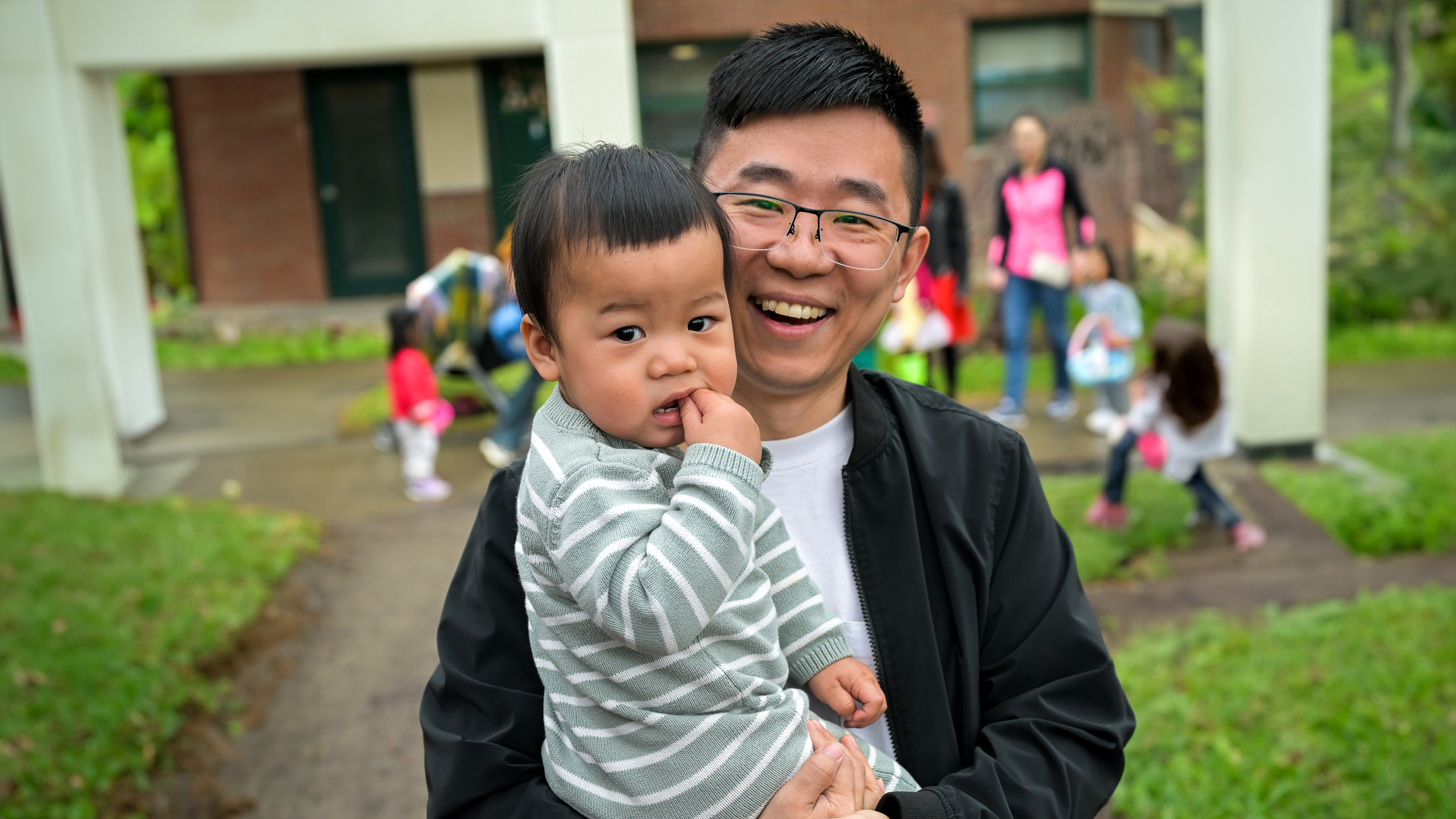
While you are meeting the rigorous requirements of your academic program, you also have a set of responsibilities with being or becoming a parent. Cornell recognizes the unique challenges that students with children face in achieving their higher education goals and has a number of resources available.
Academics
Expecting students’ lives will be very different after a baby’s arrival. You may want to use that time marker, before and after the child’s arrival, to identify and try to predict the impact on your academic program. It is important to determine how you will balance both your academic demands and parenting responsibilities.
You will need to effectively communicate with key stakeholders on your transition to parenthood. We recommend that you put this in writing; once you have an outline, get input and feedback from others to help clarify your plans.
Your college, degree, or academic program has specific practices to support your family planning needs. Please visit the Contact Us section to get in touch with the appropriate person for your college, degree, or program.
Childcare and School
Considerations for Expecting Students
Babies and children take a lot of time, energy, and resources. Understanding your needs may change, some initial questions to consider include:
- Will you want to or be able to take off time to be with the baby?
- How much time will you be able to be with your child?
- What will the impact be on your academic program?
- Can a health leave of absence from your academic program assist you in the transition?
- What child care options exist to help you juggle both academic expectations and care responsibilities?
Child Care Assistance
If you are looking for child care assistance, contact a Cornell Work/Life consultant (worklife@cornell.edu) to schedule a meeting on topics related to dependent care. Local daycare centers often have waiting lists, so it is important to start thinking about child care early.
Care@Work (Care.com)
To help you locate caregivers for your family, pets, and home, Cornell provides free membership access to Care.com through their employer platform, Care@Work. Care@Work is available to benefits-eligible employees, retirees, postdoctoral associates, and graduate and professional students.
With 11.4 million caregivers in its directory, Care.com helps you find, schedule, and manage care via their app and website. Read reviews by previous hirers, search based on availability, and much more.
Using Care@Work:
- Visit the HR website for details about the service
- Create an account with your Cornell ID number through Cornell’s Care enrollment page.
- Post a position and/or search the directory for caregivers.
Cornell University Child Care Center
The Cornell University Child Care Center, managed by Bright Horizons Family Solutions, provides care to six-week- to 5-year-old children of Cornell students, staff, and faculty. While the center is often at capacity, there is the option to join the waitlist for when a spot opens up. Call 607-255-1010 to learn more.
Public Schools
Public school education is free in the U.S. for all children aged 5 and older. A child must be 5 years of age by December 1 in order to begin school that same year. To enroll your child, contact your local public school office.
Immunizations
To enroll your children in school or child care, you must have a record of their immunizations along with their birth certificate or passport. For up-to-date information about required immunizations visit the Ithaca City School District website.
School Closures E-list
A Cornell-sponsored informational e-list alerts parents to local school closings. Once you subscribe, you will receive an email message with the name of the closed school in the subject line. If your children are not in that school, please disregard the message. Please do not call the schools. To subscribe:
- To join the list, enter your name and email address on the e-list subscription page.
- Type “join” in the subject line of the email, leaving the body of the message blank.
Finances
Having children impacts your finances. Funding during your academic program will likely become more important. If you are a self-funded student, you will need to make sure that you have financial resources for your studies and your family. If you are a funded student, you should revisit your appointment letter to understand the financial commitment that was made to you when you started your academic program. Some other resources include:
- Cornell’s Student-Parent Dependent Care Grant helps subsidize qualified students for child-related expenses. More information is available under the Student-Parent Dependent Care Grant header on this page.
- The Office of Financial Aid and Student Employment work with new and returning students with child(ren). They can provide assistance for child care expenses, usually in the form of loans, and are available to assist you as you finance your education. Call 607-255-5145 or email finaid@cornell.edu for more information.
- The special supplemental nutrition program for Women, Infants, and Children (WIC) provides nutritious foods, nutrition education, and referrals to community services for low-income pregnant and post-partum women and their children under 5 years of age. Breastfeeding support is available.
- The Cornell Child Care Center, located at 150 Pleasant Grove Road (adjacent to A lot), is an affiliate of Child Care Aware, which provides financial assistance to students who serve or have served in the armed forces. For more information about the program please visit the Child Care Aware website or contact the Cornell Child Care Center at 607-255-1010.
Health Insurance
Cornell’s Office of Student Health Benefits can help you explore options so you can select the best coverage to fit your family’s needs. Contact the office at 607-255-6363 or studentbenefits@cornell.edu.
Students who are enrolled in Cornell’s Student Health Plan (SHP) may purchase coverage for their children, provided that the children (including stepchildren and foster children) are unmarried, under the age of 26, and not self-supporting. For children to be eligible, they must reside with you or you must be court-ordered to provide insurance. There is an annual premium that can be paid all at once, or in monthly installments. Please be aware of enrollment deadlines. See SHP for dependents or contact the Office of Student Health Benefits to learn more. Even if you are not a participant in SHP, staff can help point you in the right direction so that you can get your questions answered. For pregnant students who are enrolled in the Cornell Student Health Plan (SHP), the Aetna® Maternity Program provides additional support.
If you are enrolled in another health insurance plan and have questions, contact your plan administrator.
New York State of Health: The Official Health Plan Marketplace provides a range of options for families and children. There are low-cost policies available, regardless of citizenship or immigration status. To speak with a health access navigator about the marketplace and options, contact the Human Services Coalition of Tompkins County at 607-273-8686.
Lactation
Cornell recognizes and respects the need to accommodate breastfeeding parents. There are 42 spaces located across campus designated to express or pump breastmilk. These spaces vary in terms of accommodations. Most rooms are locked and require either a key or an access card. The online directory provides more information. If you need space to pump in a building that does not have a designated space, contact Work/Life at worklife@cornell.edu or 607-255-1917. Learn about parking accommodations for nursing mothers.
In addition, Work/Life offers the Preparing for Baby Series in the fall and spring semesters. The series covers topics such as pregnancy, prenatal care, and breastfeeding.
Medical Care
- Confirming a Pregnancy: Pregnancy testing for students is convenient and confidential at Cornell Health. Though prenatal care is a specialty service Cornell Health is unable to provide, they can recommend local providers who do. You can also request help in identifying other health care providers or health-related resources you and your family may need.
- Cornell Health: When you visit Cornell Health for your own health care, let your health care providers know that you are a parent so they can be sensitive to that dimension of your life. Don’t hesitate to ask for assistance in finding the resources you and your family may need. All services at Cornell Health are confidential. Health records are kept completely separate from all other Cornell records, and information about your health is not shared with other departments at Cornell.
- Maternity Support for Student Health Plan (SHP) Members: The Aetna® Maternity Program provides support for SHP members who are pregnant.
- Getting Emotional Support: Staff at Cornell Health can provide support for the range of emotions expectant and parenting students go through. Talk openly about concerns with your medical provider, take advantage of Let’s Talk drop-in counseling at various campus locations, consider scheduling an appointment with Cornell’s Counseling and Psychological Services, or ask for a referral to a local therapist or another provider.
- Understanding Environmental Health and Safety When Pregnant: Students who are contemplating having children, are pregnant, or are nursing may discuss concerns they have related to the safety of their work or research areas with Cornell Environment, Health, and Safety (EHS). EHS professionals can conduct a review of your work areas to evaluate potential chemical, biological, and physical exposures and provide recommendations to ensure potential exposures do not pose a risk.
- Prenatal Yoga Class: Prenatal yoga classes are available for those who are pregnant or hoping to become pregnant. Learn to alleviate the discomforts of pregnancy while gaining strength and flexibility in a safe and dynamic way. With gentle stretching, conscious use of breath, deep relaxation, and mindfulness techniques, individuals can enhance the quality of their pregnancy, prepare for an empowered birth process, and learn useful skills.
- Finding a Pediatrician: Finding a pediatrician for your child is one of your most important tasks.
- Cornell Health does not provide primary health care for children.
- If your family is enrolled in Cornell’s Student Health Plan, use Aetna’s Directory of Health Care Professionals to locate a pediatrician within the network.
- Your child’s primary health care provider can make referrals to specialty care if needed.
- Cayuga Medical Center offers after-hours outpatient pediatric and adolescent care (infant through 17 years old) in a specialized care setting. Kids Care is staffed by local pediatricians and registered nurses who are experienced in the care of sick babies and children.
- For emergency care at any time, call 911 or contact Cayuga Medical Center Emergency Department at 607-274-4411.
- Visit Cornell Health's Especially for Students with Children page.
Parking
Expectant parents in their last six weeks of pregnancy can purchase a permit for the parking area closest to their place of work or classes. A doctor’s note indicating the due date is required. Prices vary depending on parking location.
Nursing and/ or pumping parents may purchase a permit, valid for 12 weeks, to park more conveniently. This permit accommodation may be renewed for another 12 weeks. Prices vary depending on parking location.
Student-Parent Dependent Care Grant
Application for the 2026-2027 SPDC Grant
The application for the 2026-2027 academic year will open on Monday August 24, 2026 through Friday, October 2nd, 2026.
The Cornell University Student-Parent Dependent Care Grant provides financial support that allows student-parents to best support their child(ren) through flexibility of funding use.
Students can apply and receive an award for each child each academic year. As of the Fall 2026 - Spring 2027 academic year, the Student-Parent Dependent Care Grant will accept new applications during the fall semester of each academic year, and will no longer have a separate spring application period. Applications will open each academic year during the first week of classes in the fall semester and remain open until the first week of October in the same semester. All applications for the academic year must be received during the fall application period.
- Applicants with new children expected to be born/adopted before the last day of spring semester classes must apply during the new, single application period in the fall semester.
- Applicants with expected new children must provide an update of the arrival of their new child by emailing SPDCgrant@cornell.edu with the name and birth date of their child. Awards will be disbursed to eligible applicants who provide a written update of arrival.
- If expected children do not arrive/the SPDC Grant administrator does not receive an update by the last day of spring semester classes, the applicants must reapply in the following fall semester.
- Spring awardees will no longer have an automatic 50% proration to their award. Applicants who receive their award in the spring semester will now receive a full award, prorated at the same rate as all other applicants receiving awards during the fall semester.
General eligibility requirements:
- Applicants must be students currently enrolled in an undergraduate, graduate, Law, Business, or Vet school program at the time of application.
- Applicants must have a household income of $150,000 USD or less.
- Applicants must provide income verification. Tax returns, Employment earning statements, or other acceptable documentation must be provided in English or with appropriate English translations or annotations so SPDC Grant administrators can verify the household income within the provided documentation.
- Applicants may only receive an award for each eligible dependent child once per academic year.
- If applicants or their co-parents are Cornell Employees and qualify for the Employee Child Care Grant, they must apply only for the Employee grant program instead of the SPDC Grant.
- Please see the application for further detail on eligibility.
2026-2027 Academic Year Schedule
- Application opens Monday, August 24
- Application closes Friday, October 2
- Eligibility notifications by Friday, October 30
- Award notifications by Friday, November 13
- Awards posted to student bursar accounts by early December.
- Awards will be processed via student Bursar accounts. Please allow several weeks for awards to become available.
- There will be NO spring semester application period going forward, beginning in the 2026-2027 academic year. All applications should be submitted during the fall semester application period listed above, including for students expecting a new child to be born/adopted by the last day of spring semester classes.
Policies
Cornell’s policies offer guidance, best practices, and procedures that promote a supportive culture for students with families.
Health Leave of Absence
Cornell recognizes that medical and mental health conditions can interfere with a student’s academic success and personal safety. Taking a health leave of absence (HLOA) provides students with a break from their studies to attend to treatment or management of a health condition. Any Cornell student can request to take an HLOA. The university’s goal is to enable students to address their health needs and return to complete their academic program. Learn more about health leaves of absence.
Parental Accommodation
Cornell University graduate students are eligible for parental accommodation to help balance the competing demands of school and family life. University Policy 1.6: Graduate and Professional Student Parental Accommodation provides graduate students with the option of either 12 weeks of paid accommodation (for students receiving full funding from the university as assistants–whether as TAs, GRAs, RAs or GAs; fellows; or trainees) or up to one year of reduced load status to serve their needs surrounding childbirth, adoption, newborn care, foster care, and acute child health care. Learn more about Cornell University Policy 1.6.
Prohibited Bias, Discrimination, Harassment, and Sexual and Related Misconduct
University Policy 6.4 prohibits all members of the university community from engaging in sexual assault/violence and also prohibits community members from engaging in prohibited discrimination, protected status harassment, and sexual harassment, which includes sexual assault/violence. Learn more about Cornell University Policy 6.4.
Title IX
Title IX of the Education Amendments of 1972 (“Title IX”), 20 U.S.C. §1681 et seq., is a Federal civil rights law that prohibits discrimination on the basis of sex—including pregnancy and parental status—in educational programs and activities. All public and private schools, school districts, colleges, and universities receiving any Federal funds (“schools”) must comply with Title IX. Learn more about Title IX.